
Silicone house rendering · Bristol & North Somerset
Silicone Rendering
A crisp, modern, through-coloured finish that sheds rainwater and keeps its looks. Silicone render is one of the most popular choices for homeowners transforming the outside of their house.
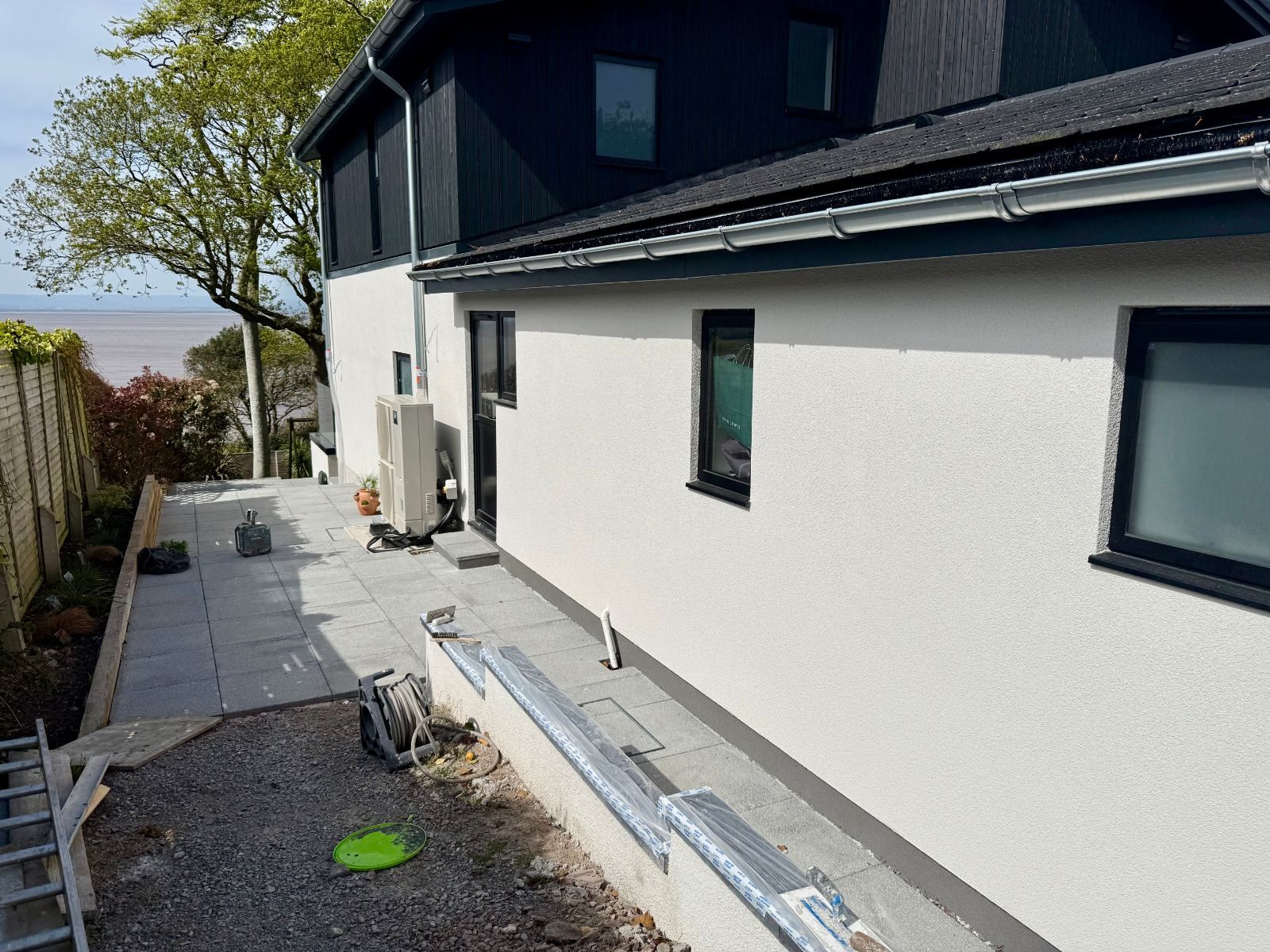
What is silicone render?
Silicone render is a thin-coat decorative finish, typically a millimetre or two thick, applied as the final layer of a complete render system. It's made with a silicone resin binder, which makes the surface strongly water repellent while still allowing moisture vapour to escape from the wall.
Because the colour is in the render itself, there's no painting involved. The finish has a fine, even grain that gives a clean, contemporary look. It suits modern houses but also works well on older properties that need a fresh start.
Why homeowners choose silicone render
- Water repellent. Rain beads and runs off rather than soaking in, which helps the walls stay drier and the finish stay cleaner.
- Breathable. Moisture vapour can still escape from the wall, which matters for the long-term health of the building.
- Some flexibility. Silicone finishes have a degree of flexibility, which helps them cope with small movements when used as part of a reinforced system.
- Huge colour choice. From soft whites and greys to stronger tones, with consistent colour across the whole house.
- A modern look. Sharp corners, crisp reveals and an even texture give a high-end finish.
Colours and textures
Silicone finishes are tinted in the factory, so the colour is consistent across every bag. Most manufacturers offer extensive colour ranges, and finishes usually come in a choice of grain sizes. A finer grain gives a smoother, more refined look; a coarser grain is a little more forgiving and textured.
Pale colours are the most popular, but greys and warmer tones can look excellent, particularly as a contrast on a bay, an extension or a feature panel. We'll bring colour charts and samples and talk you through how colours change in daylight on a full elevation.
Tip: look at a finished house in a colour you like before committing. A small sample always looks darker or lighter than the same colour across a whole wall.
Weather resistance and maintenance
Silicone's water repellence means it generally picks up less dirt than many traditional finishes, but no render is completely maintenance-free. Walls that are shaded, north facing, near trees or in exposed coastal spots can develop algae or staining over time. If that happens, the surface can usually be treated and gently cleaned with suitable products. Pressure washing at high power isn't recommended.
Keeping gutters and downpipes in good order, and making sure water isn't constantly running down one area of wall, makes a big difference to how any render looks over the years.
Applied over a properly prepared background
Silicone is a finishing coat, so what's underneath matters most. Depending on your walls, the build-up usually includes:
- Preparation of the existing surface: cleaning, repairing, removing unsound material and dealing with anything that would stop the system bonding properly.
- Beads to corners, window and door reveals, and a bellcast or base bead at the bottom of the render.
- A basecoat with embedded reinforcing mesh, where the system specifies it.
- A primer to even out the suction and help the finish bond.
- The silicone finish, applied and textured in the chosen grain.
The exact system depends on the substrate: brick, block, existing render, or an insulated system. We follow the manufacturer's specification for the products being used rather than a one-size-fits-all approach.
Why mesh-reinforced basecoats matter
Where specified, a reinforcing mesh embedded in the basecoat spreads stresses across the wall and helps resist cracking, especially around openings where stress concentrates, and on mixed backgrounds such as an older house meeting a newer extension. It's one of the parts of a render job you never see when it's finished, and one of the most important.
The importance of correct preparation
Most render problems we're asked to fix come down to what happened before the finish went on: render applied over loose or damp surfaces, missing beads, no mesh where it was needed, or the wrong product for the background. We spend time on preparation because that's what makes a silicone finish last.
Silicone or monocouche?
Both are excellent when used in the right place. Silicone gives a thinner, finely textured finish with excellent water repellence and the widest colour choice. Monocouche is a thicker, through-coloured render, usually with a scraped finish. Read our monocouche rendering page for a side-by-side comparison.
Silicone render projects
Recent silicone render transformations

Yatton · Semi-detached house
External Wall Insulation & Silicone Render, Yatton
A dated, poorly insulated semi transformed with 90mm external wall insulation and a clean silicone render finish.
View project
Portishead · Detached house
New Build & Renovation in Silicone Render, Portishead
New-build sections, the existing house, two double garages, retaining walls and steps, all finished in Chalk White silicone.
View project
Backwell · Bungalow
Bungalow Insulation & Silicone Render, Backwell
A Backwell bungalow given external wall insulation and a fresh silicone render finish all the way round.
View projectFAQs
Silicone render questions
Does silicone render stay clean?
Silicone finishes are water repellent, which helps rainwater run off and generally reduces dirt pick-up compared with many traditional finishes. No render is maintenance-free, though. North-facing walls, shaded areas and properties near trees can still develop green or dark staining over time and may need gentle cleaning with a suitable product.
Can silicone render be applied directly to brick?
Silicone is a thin finishing coat, so it's applied over a properly prepared base: typically a basecoat with reinforcing mesh, or a suitable render background, following the manufacturer's system specification. The preparation underneath is what makes the finish last.
Can silicone render crack?
Any render can crack if the background moves or the system isn't installed correctly. Mesh-reinforced basecoats, correct beads and movement joints where specified, and proper preparation all reduce the risk significantly.
Related pages
Interested in silicone render for your home?
Send us a few photos and your postcode. We'll arrange a visit and give you a clear, written quote.