
Through-coloured render · spray applied
Monocouche Rendering
A through-coloured, spray-applied render that gives a solid, even, softly textured finish with no painting needed. Monocouche is where our rendering business started, and it's still a superb choice for the right house.
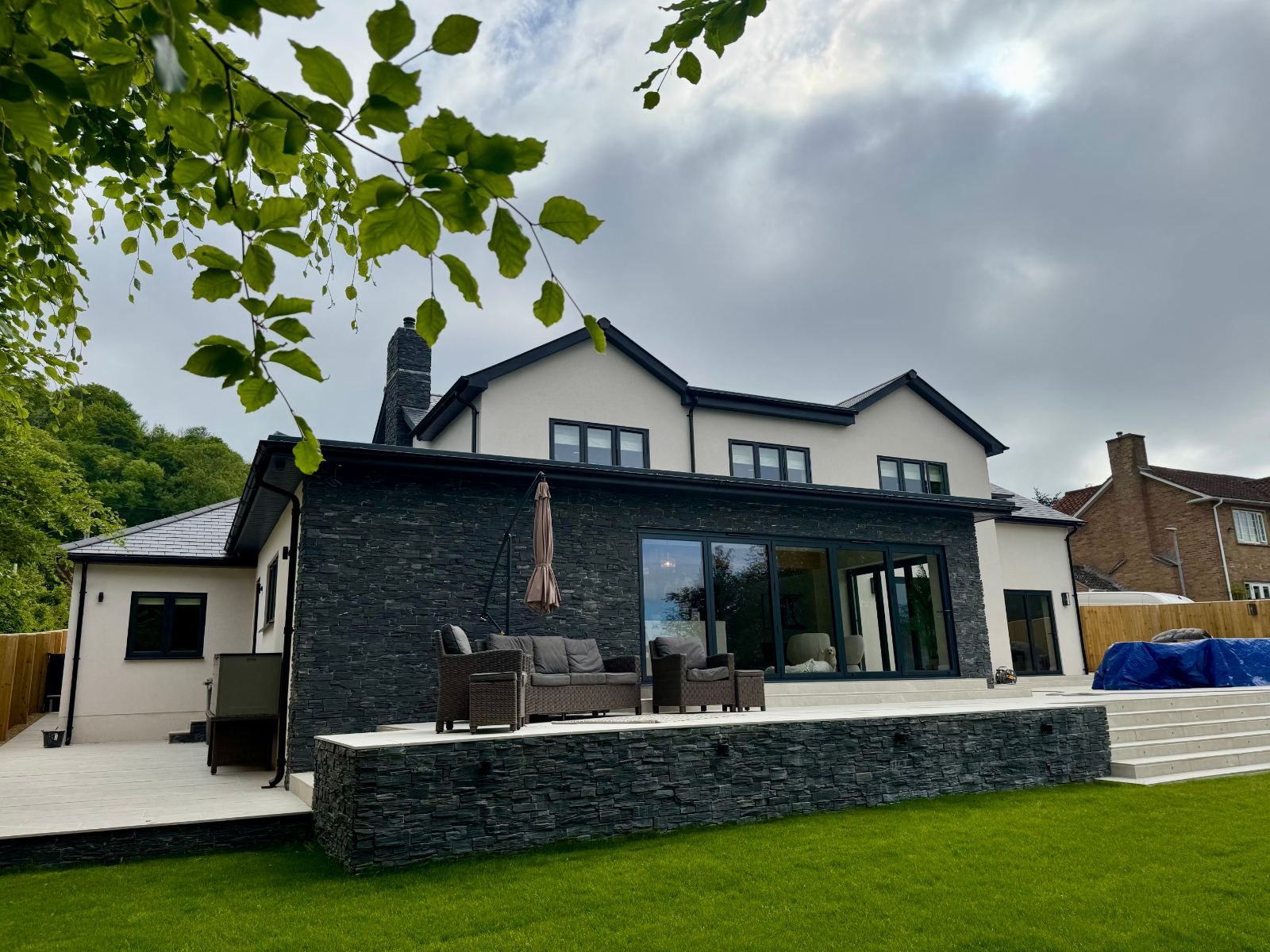
What is monocouche render?
"Monocouche" is French for "single layer". It's a cement-based render that's coloured all the way through and is designed to be applied as one coat, usually built up in two passes, wet on wet. Once it has firmed up, the surface is typically scraped back to reveal an even, slightly textured finish.
Because the pigment runs through the full thickness of the render, there's no paint to flake or fade unevenly, and small knocks don't reveal a different colour underneath.
Through-coloured finishes
Monocouche renders come in a range of factory-made colours, from bright whites to creams, greys and earthier tones. The scraped finish is the most popular, but other textures are available depending on the product. We regularly apply monocouche systems from manufacturers including Ecorend and PRB, and can show you colour charts and finished examples.
Spray application
We apply monocouche using specialist render spray machines. Spraying gives a consistent thickness and texture across large elevations, and it lets us work efficiently, which matters when the weather window is limited. The application is still a craft: timing the scrape, keeping edges and reveals sharp, and working in sensible sections so there are no visible joins.
Which properties suit monocouche?
Monocouche is typically applied to sound, suitable masonry backgrounds such as blockwork and many brick walls, which makes it a popular choice for new extensions and new-build homes, as well as for existing houses being transformed. Where the background is mixed, weak, previously painted or already rendered, it may need additional preparation, a different build-up, or a different system altogether. That's something we assess on site.
Monocouche vs silicone render
| Monocouche | Silicone | |
|---|---|---|
| Type | Cement-based, through-coloured, one-coat render | Thin-coat finish over a basecoat or suitable background |
| Thickness | Relatively thick, built up in passes | Typically 1–2mm finish coat |
| Typical look | Soft scraped texture | Fine, even grain in a choice of sizes |
| Colour | Manufacturer's colour range | Very wide colour range |
| Water repellence | Good | Excellent; water beads off the surface |
| Often chosen for | Sound masonry, extensions, new builds, durable everyday finish | Modern look, exposed walls, wider colour choice, over prepared existing surfaces |
This is a general comparison. Products vary between manufacturers, and the right answer depends on your walls and what you want. We'll explain our recommendation in the quote.
Substrate preparation comes first
Monocouche needs a sound, clean, suitably absorbent background to bond to. That can mean removing old coatings, repairing defective areas, fixing beads accurately, treating junctions between different materials, and using mesh where the system calls for it. Skipping preparation is the most common reason one-coat renders crack or come away, which is why we treat it as part of the job, not an extra.
Monocouche projects
Recent monocouche render work
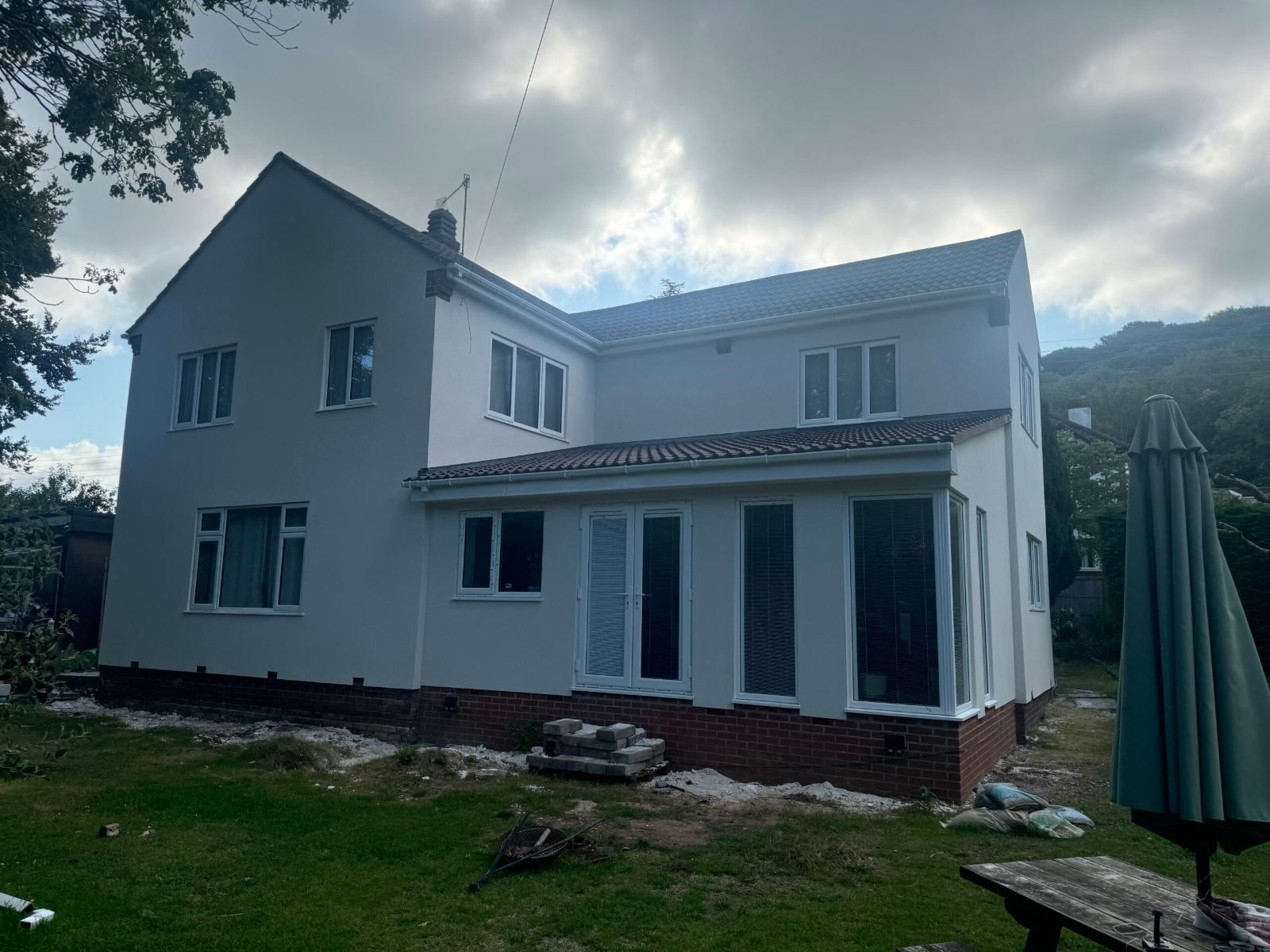
Clevedon · Detached house
Insulated Monocouche Re-Render, Clevedon
Tired render and dated cladding replaced with one clean monocouche finish, with insulation added where the cladding came off.
View project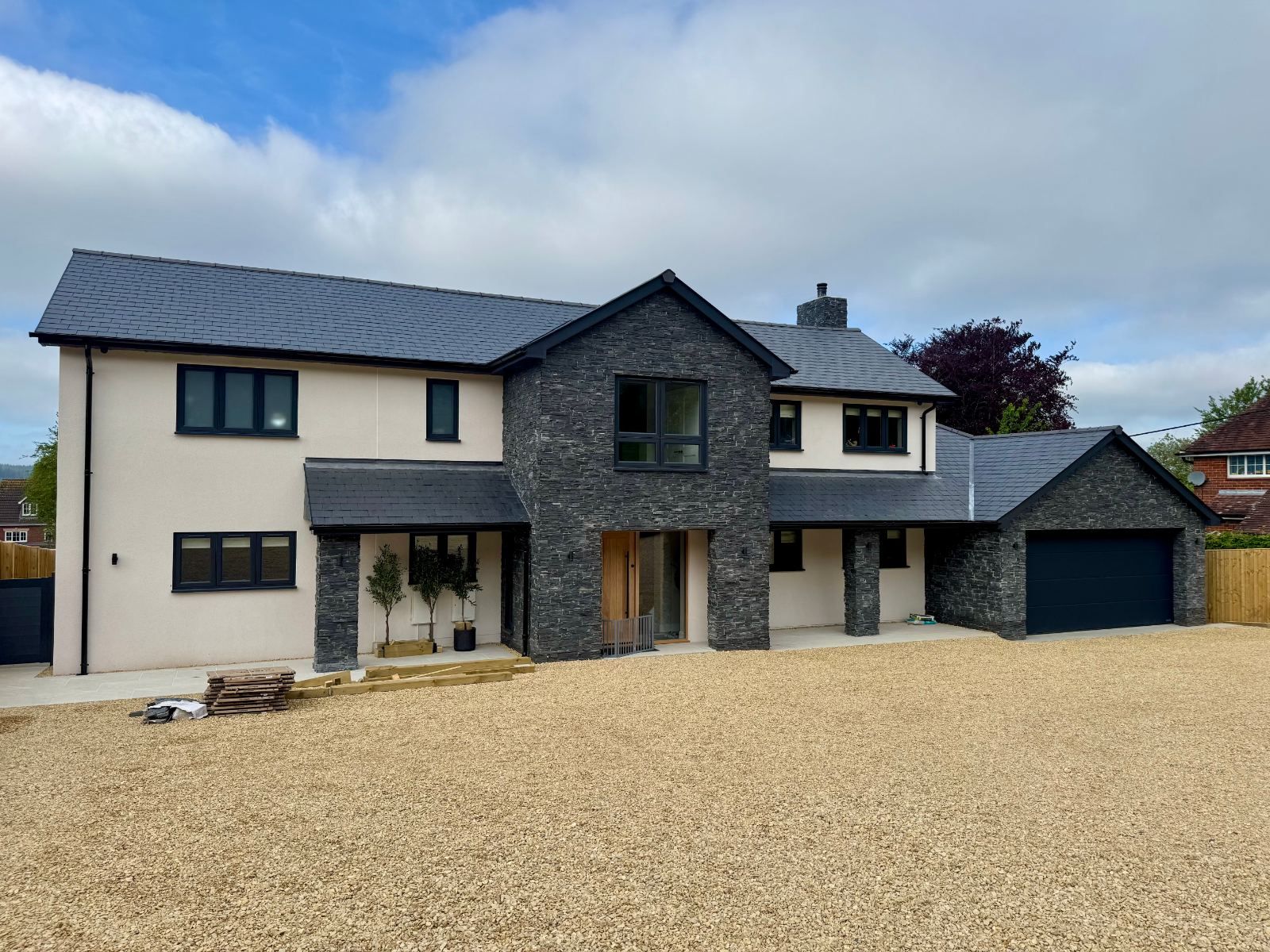
Somerset · Detached house with extension
Monocouche Render Blending Old and New, Somerset
New blockwork and the original brickwork brought together under one monocouche finish, alongside dark stone detailing.
View project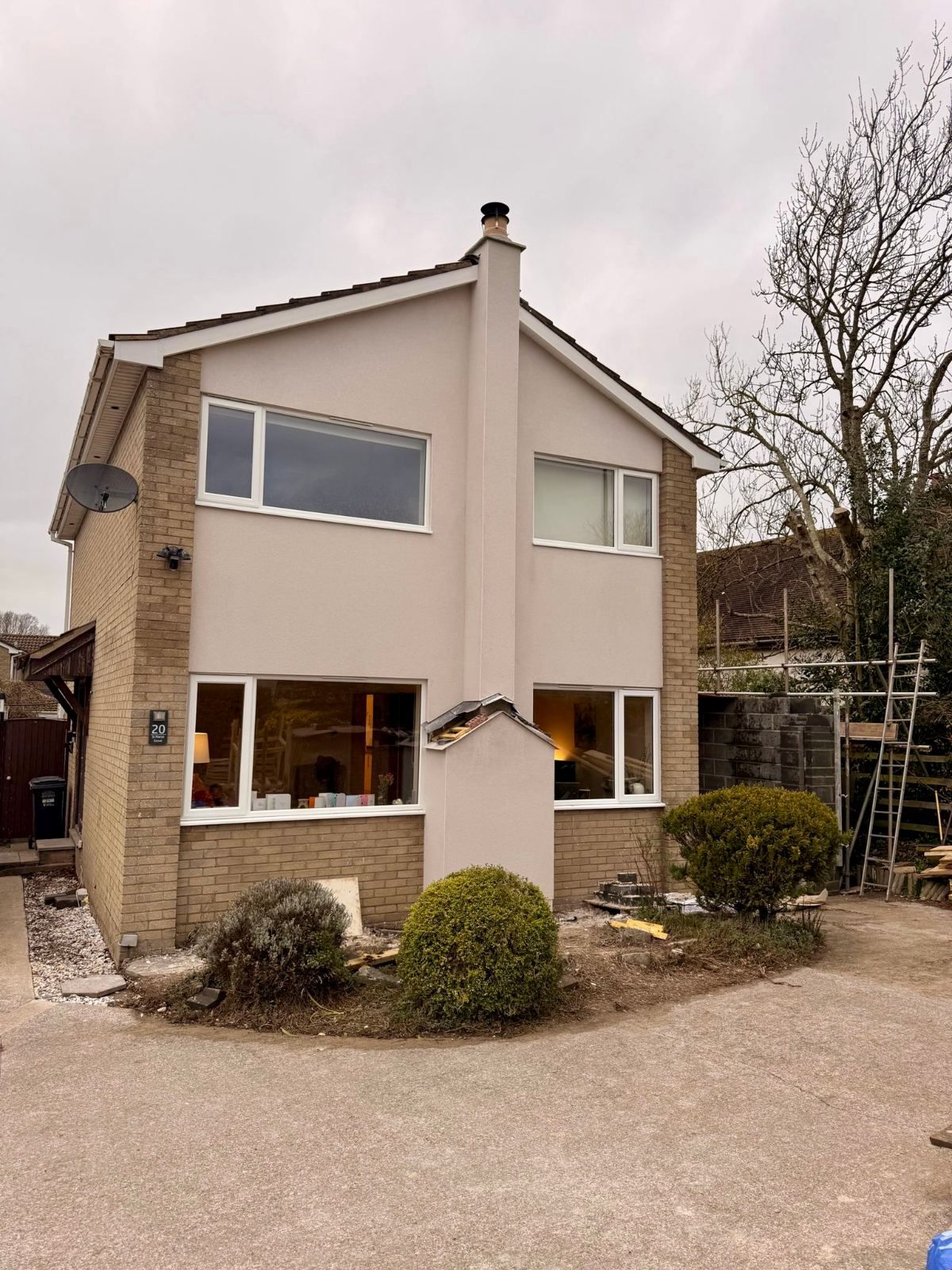
Nailsea · Detached house
Cladding Replaced with Render, Nailsea
Ageing cladding swapped for render carrier board and a light grey lightweight monocouche, ready to match a future extension.
View projectFAQs
Monocouche questions
Does monocouche render need painting?
No. Monocouche render is coloured all the way through, so the finished colour comes from the render itself rather than paint.
What does a monocouche finish look like?
The most common finish is a scraped texture, which gives a soft, even, slightly matt surface. Other textures are available depending on the product.
Related pages
Is monocouche right for your home?
Send us a few photos and your postcode. We'll arrange a visit and give you a clear, written quote.